
What are the Witch Hat Atelier Brimmed Caps?
The Witch Hat Atelier Brimmed Caps are witches who reject the restrictions established by the Day of the Pact and continue to use forms of forbidden magic. The label describes a group defined by opposition to the rules, but it does not mean that every member shares one plan, one leader, or one reason for breaking them. That distinction is the key to reading the faction.
This guide contains manga spoilers, including the story behind Coco's childhood spell and later characters connected with healing magic. If you are anime-only or have not read the relevant chapters, stop here and return after those events. For a broader introduction to the setting, see our Witch Hat Atelier magic guide; this page stays focused on the Brimmed Caps and their motives.
Why are they called Brimmed Caps?
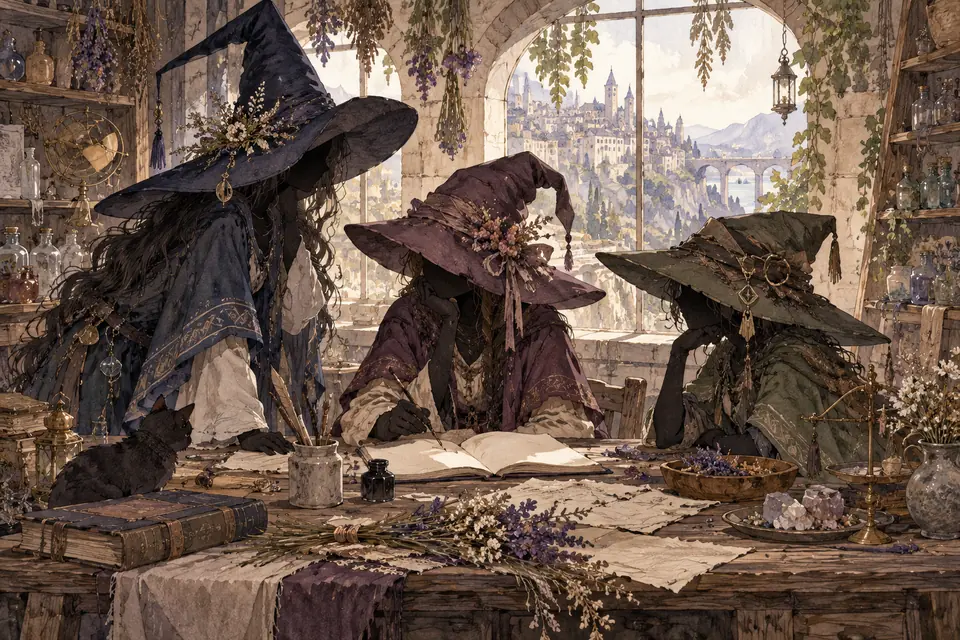
The name points to the broad brims and ornaments associated with the group's hats. A community-maintained Witch Hat Atelier reference describes the hats as a way to obscure their wearers' faces, contrasting them visually with the pointed caps worn by witches who follow the Pact. That is useful for recognizing the faction in the story, but the hat itself is not a full explanation of its politics.
Brimmed Caps is also a convenient story label, not a neat membership chart. The manga introduces people connected with the group at different moments and gives them different priorities. Avoid treating a costume feature as proof that two people agree about how forbidden magic should be used. The story asks readers to look at actions, stated goals, and consequences separately.
The group opposes pointed-cap witches and the Knights Moralis, an institution tied to enforcing accepted rules. Their conflict concerns access to magic, permitted techniques, bodily change, and who bears the cost when a spell goes wrong.
What does the Day of the Pact prohibit?
In the setting, magic is drawn rather than cast from an innate supply of power. Rules around access and technique therefore have practical consequences: they decide who is allowed to learn, which knowledge is circulated, and what a trained witch may do to another person. The Day of the Pact marks the boundary between accepted practice and forbidden magic.
The secondary reference used for this guide summarizes forbidden practices as including spells intended to harm another person, magic that directly alters or transforms the body, and spell tattoos placed on a body. Those categories make the conflict concrete. A forbidden spell is not just a different artistic style; it can remove consent, create lasting physical consequences, or give one person power over another.
A ban can reduce danger, but it can also block help. The manga therefore asks more than whether magic is forbidden: what was done, to whom, with what consent, and with what result?
Why do different Brimmed Caps use forbidden magic?
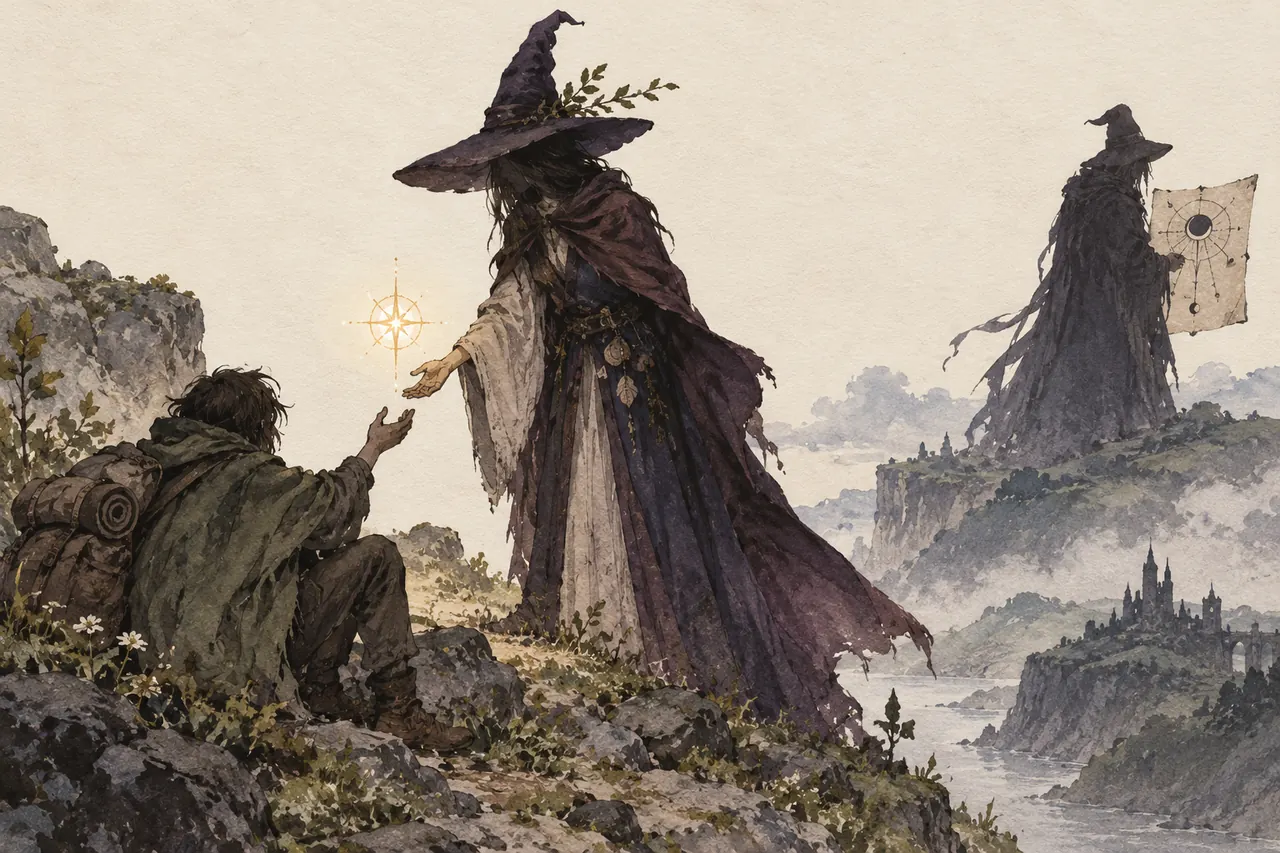
Early Brimmed Caps such as Iguin and Sasaran focus on Coco. The community reference reports that they call her the “child of hope” and want her to use forbidden magic in a way they consider proper. Their argument is strategic as well as ideological: if Coco can use a prohibited technique for a defensible purpose, they believe that could challenge the assumption that every forbidden possibility must remain closed.
It is not a neutral experiment: Coco is a child approached through a plan shaped by the group's conflict with witch society. Talk of freedom still leaves questions of choice, withheld knowledge, and whether the person being recruited understands the consequences.
Later characters connected with the Brimmed Caps, including Restys and Ininia, are presented with a different emphasis. The reference describes them using forbidden magic in healing and sharing techniques with outsiders who need help. Their actions bring a neglected group into the debate: people who may not be able to receive care through the accepted institutions.
Their aims do not make every method harmless. A spell that changes a body can carry risk even when it is offered as treatment, and sharing knowledge outside oversight raises questions about safety and consent. The important point is that the story gives readers more than one motive to evaluate instead of asking them to approve or condemn the entire faction at once.
How are Coco and Iguin tied to the Brimmed Caps?
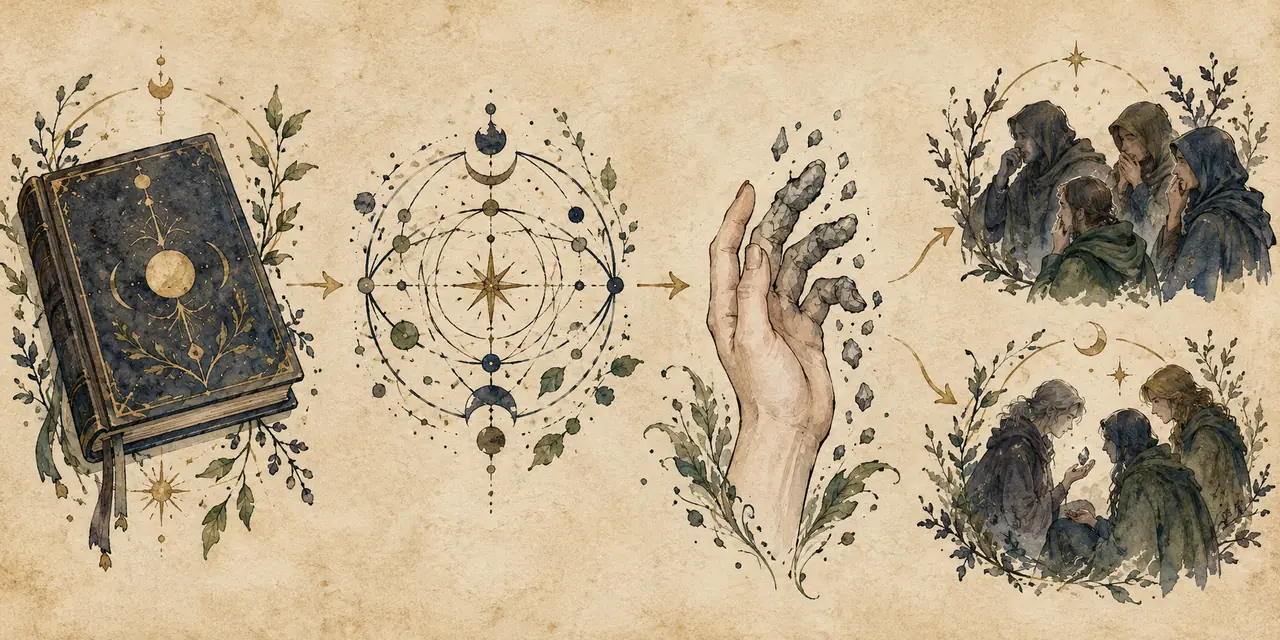
The connection begins before Coco becomes Qifrey's apprentice. According to the cited chapter summaries in the community reference, Iguin sold Coco a picture book containing ordinary and forbidden spells, along with a pen and ink. Years later, Coco copied a spell after seeing how magic was drawn and unintentionally turned her mother to stone. That event is the personal disaster that makes the rules feel immediate rather than abstract.
Iguin and Sasaran later continue trying to draw Coco toward forbidden magic. Their attention to her gives the conflict a personal shape: Coco's ability and openness make her valuable to a faction seeking evidence for its argument. But the story does not require readers to accept the “child of hope” framing. It is the group's description of her, not a role Coco chose for herself.
Keep three questions separate: what Coco intended, what others placed in her path, and how adults could have made dangerous knowledge safer. Her actions do not erase other people's influence or settle institutional responsibility.
Our Coco character guide covers her role in the wider cast, while the Witch Hat Atelier spells guide explains magic categories and circle examples. Neither replaces the faction-specific question here: whether a rule protects people, preserves control, or does both at once.
Are the Brimmed Caps all villains?
Calling every member a villain loses the distinction the story builds. Some members pursue Coco as a way to legitimize forbidden practice; others are associated with healing and aid for outsiders. The community reference also records Ininia objecting when harmful acts are blamed on the group as a whole, including an incident she says was not theirs. This does not prove that every accusation is false; it shows why collective blame is an unreliable shortcut.
Two ideas can be true at once: the Pact may leave people without help, and forbidden magic may injure, coerce, or alter someone without consent. Criticize unequal access while questioning anyone who manipulates a child or risks another person's body.
That tension is why the faction can be unsettling without being a single-minded evil organization. Different members use a shared rejection of the Pact to justify different choices. The story's moral test is not whether someone wears a brimmed hat; it is how they treat other people when their beliefs become action.
How to understand a Brimmed Caps appearance
- Identify the specific character. Do not transfer Iguin's stated interest in Coco to every person connected with the group.
- Name the technique and its effect. Separate a forbidden spell's category from the purpose claimed for using it.
- Check consent and power. Ask who knew what would happen, who could refuse, and who faced lasting consequences.
- Read the outcome, not only the promise. A healing intention matters, but so do risk, access to follow-up care, and what the person receiving help wants.
- Keep source confidence visible. The chapter-indexed fan wiki is a secondary guide, not an official publisher statement. For exact nuance, check the manga chapter itself.
For the broader rules of drawn magic and secrecy, read the magic-system explanation; this page follows the people who challenge the Pact.
Frequently asked questions
Who are the Brimmed Caps in Witch Hat Atelier?
They are witches who reject restrictions from the Day of the Pact and continue using forms of forbidden magic. The story presents members with different goals, so the label should not be treated as a single shared motive.
Why do the Brimmed Caps want Coco?
Iguin and Sasaran call Coco the “child of hope” and want her to use forbidden magic for a purpose they consider proper. That is their framing of her potential, not a choice Coco made.
Are all Brimmed Caps evil?
No single label covers them all. Some pursue ideological change through Coco, while later members are associated with healing and helping outsiders. The risks of forbidden techniques remain part of the story's criticism.
What is the difference between pointed-cap witches and Brimmed Caps?
The central distinction is their relationship to the Day of the Pact: pointed-cap witches are associated with accepted practice, while Brimmed Caps reject its restrictions and use forbidden magic. Individual motives still vary.
Is this article spoiler-free?
No. It discusses Coco's childhood spell and later manga characters linked with healing magic. Read only if those plot details are acceptable to you.
Summary
The Witch Hat Atelier Brimmed Caps matter because they expose the cost of drawing a hard line around magical knowledge. Their opposition challenges the Pact, but the story also asks whether a claimed good purpose can justify danger or a lack of consent. Read each member through their actions and the people affected, not through the hat alone.
Sources and limits
- Brimmed Caps, Independent Witch Hat Atelier Wiki — Secondary, chapter-indexed summary for faction names and story events; consulted October 24, 2026. Interpretations are attributed rather than treated as official statements.
- Kodansha's Witch Hat Atelier series page — Official publisher context for the series; it does not independently verify every faction detail above.